

[Review] Sentimental Value
Joachim Trier blurs the line between family and cinema.
Renate Reinsve will be running in the lead actress category this awards season for her portrayal of Nora Borg but it is the Borg family’s house that serves as the focal point of Joachim Trier’s Sentimental Value. Through a school essay, a young Nora details how the house effectively acted as the fifth member of their family until her parents’ divorce led her father Gustav (Stellan Skarsgård) to return to his native Sweden, leaving an emptiness behind.
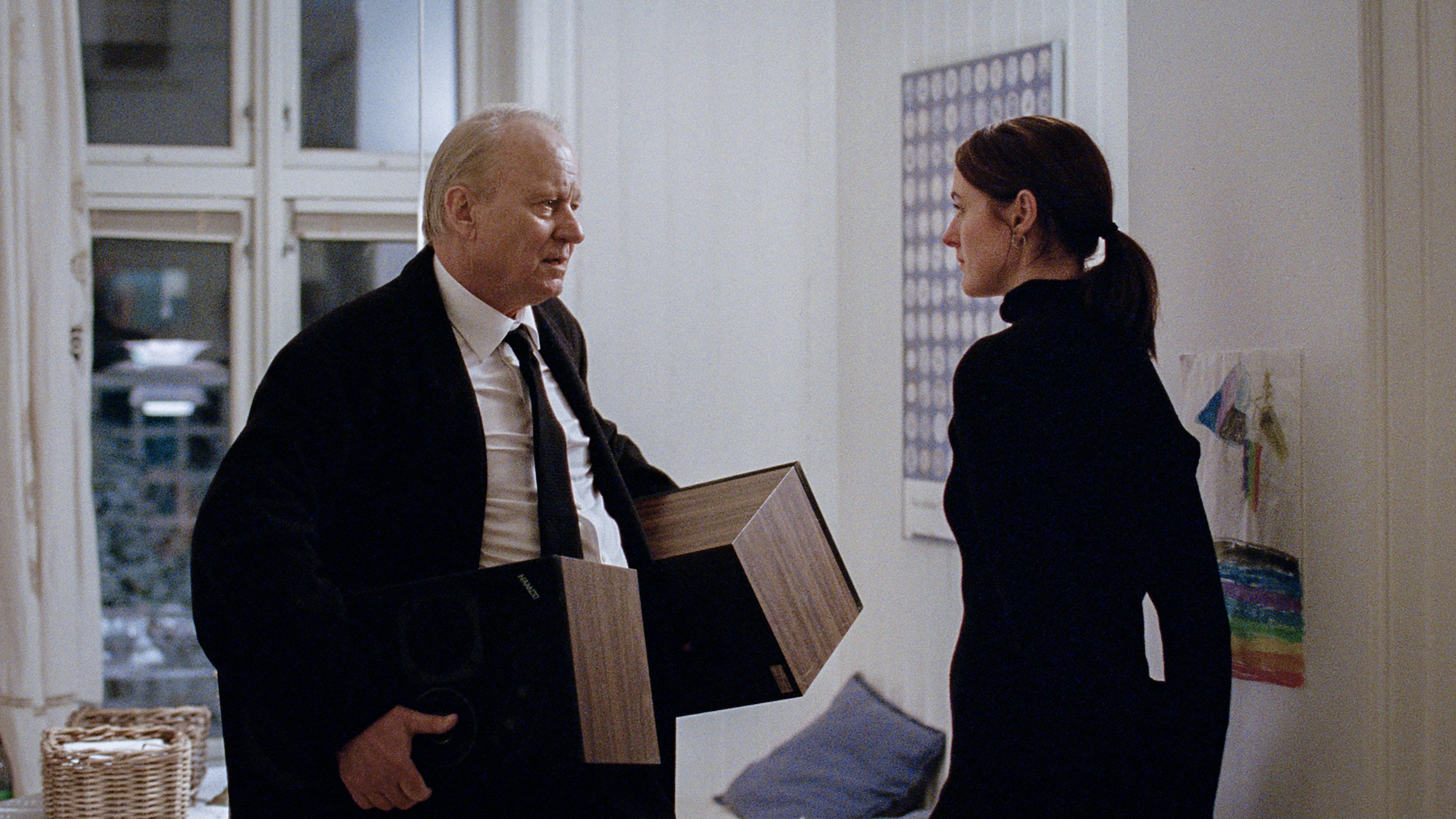
His absence has left an irreversible mark on the lives of Nora and her younger sister Agnes (Inga Ibsdotter Lilleaas) to the point where their behaviour in adulthood gets entirely thrown off balance when Gustav reappears at their mother’s funeral. Nora is angry and vocal about it, Agnes is quiet and non-confrontational. When Gustav, a renowned film director, offers Nora, who works as a stage actress, the leading role in his first film in over a decade, she storms out of the cafe.
Her avoidant nature is paralleled by both Trier’s film itself, exploring how Gustav uses cinema to rebuild the relationships with his daughters instead of approaching them directly, and Gustav’s fictional script, which delves into his strained relationship with his own mother. But at its core, the avoidance stems from Gustav’s inability to communicate outside of a film set. We see this later on as he eventually begins production on this new feature and is able to comfortably build trust and rapport with his lead actress but it is also reflected in the dynamics within his own family. Agnes only ever had his attention when she starred as a child actress in one of his older features and her son now also becomes a target as Gustav wants to employ his 9 year old grandson in a supporting role of his new project. He is not necessarily malicious, but his actions only keep confirming what the scene with Nora at the cafe when he offers her the role sets up.

When Nora turns down his offer, Gustav hands the role to Rachel Kemp (Elle Fanning), a young American actress he meets at his own retrospective at a festival. There is an inherent comedy in introducing an American outsider into a Norwegian household and production, but from the very start, Fanning nails the balance between remaining the stereotypical “stupid American” and bringing impressive levels of perceptiveness and emotional intelligence to the Borg household, ultimately becoming the catalyst for Nora and Gustav’s reconciliation. There is also something particularly delicate about playing an actor and Fanning is terrific as she walks the tightrope between not playing an awful actor but maintaining the very obvious truth that Rachel is just simply not the right fit for the role. After all, both she and the audience know it was not written for her.
Many will take the scene between the two sisters towards the end of the film as the highlight, the pair acknowledging the effects of their emotionally difficult childhood, but it is the very final scene that really shines under Trier’s direction. It’s a sequence the audience has seen laid out earlier, now adjusted and alive, delivering one of the most – if not the most – satisfying conclusions of the year, confirming to the audience why the role was written for Nora to begin with. There is hardly a greater joy for an audience than a cinematic full circle like this one.